

14 Apr Impact of Resistance Training, Mobility and Weighted Plyometric Balls on Pitching Velocity
Written by Damon Hill, Accredited Exercise Physiologist
Baseball is a sport I have been involved in for many years, from club level through to national competition. Through my academic development, I have come to the conclusion that baseball in Australia remains relatively underdeveloped from a strength and conditioning (S&C) perspective, particularly given the increasing performance demands associated with pitch velocity, pitch volume, and spin rate. While many developing athletes utilise plyometric (plyo) balls and banded warm-ups prior to games, current research suggests that these methods, when implemented in isolation, may hinder performance or increase injury risk if not supported by a well-structured strength and mobility program (Reinold et al., 2018; Zhang et al., 2023).
Resistance training (RT) plays a critical role in both sport performance and overall musculoskeletal resilience. When prescribing RT for baseball athletes, it is essential to understand the mechanical loading patterns and physical demands of pitching. During the pitching motion, the elbow is exposed to forces of approximately 1090N shortly after ball release (Diffendaffer et al., 2023). Without sufficient torque capacity and surrounding muscular strength, this may place excessive stress on the UCL (ulnar collateral ligament) and GHJ (glenohumeral joint).
Shoulder ER (External Rotation) at 90d Shoulder Abduction and Pitch Cycle
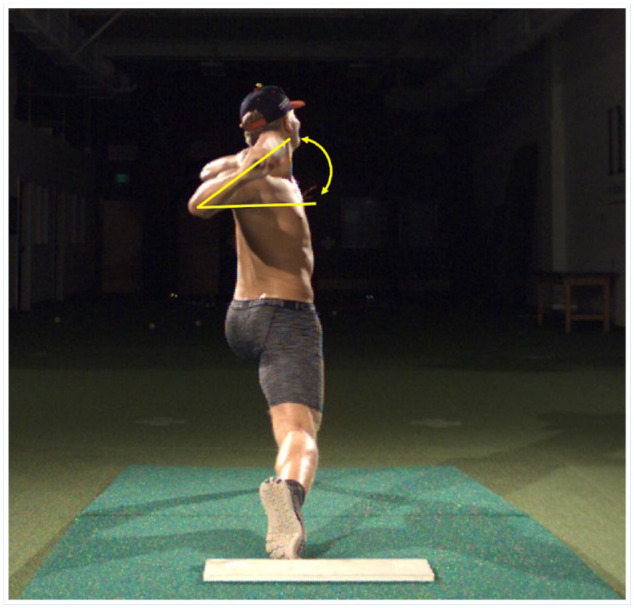
(Diffendaffer et al., 2023)
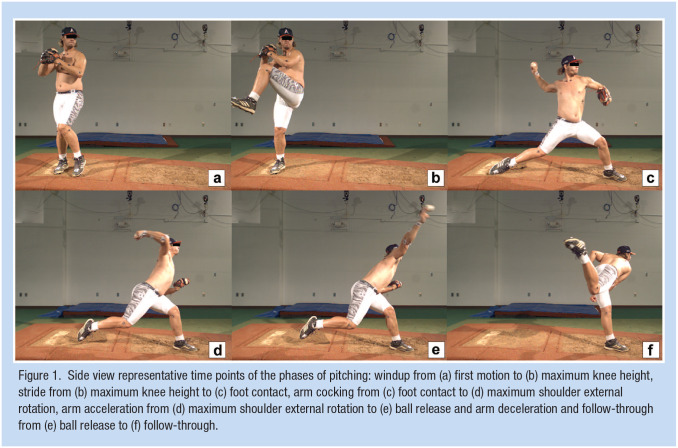
(Diffendaffer et al., 2023)
From a performance standpoint, RT has demonstrated clear benefits. Upper body strength training alone has been shown to increase pitch velocity by approximately 1.69 mph compared to control groups (Lachowetz et al., 1998). In contrast, weighted ball programs, while effective for velocity development, appear to present a different risk profile. Reinold et al. (2018) reported an increase in pitch velocity of approximately 1 m/s (~2.2 mph); however, this was accompanied by a 24% injury rate within a small cohort over a short-term intervention period, including four elbow injuries.
Additionally, weighted ball programs have been associated with increases in PROM (Passive Range of Motion) for shoulder ER of approximately 4.3° (Reinold et al., 2018). This increase in ER may reflect reduced neuromuscular control and poor positioning efficiency during high-velocity throwing, particularly in athletes lacking sufficient strength and control through these ranges. Increased PROM in ER may heighten anterior loading of the GHJ and contribute to altered joint mechanics. Over time, this may result in compensatory adaptations, including posterior shoulder tightness and increased loading of the medial elbow (Melugin et al., 2021).
With respect to mobility, thoracic spine (T-spine) mobility appears to play a greater role in injury mitigation than direct pitch velocity increases (Skopal et al., 2024). Reduced thoracic rotation has been associated with increased elbow valgus stress and compensatory movement patterns during pitching (Okamura & Iida, 2025). Conversely, improving T-spine mobility may help in reducing these stresses by enhancing kinetic chain efficiency.
Practical interventions to address these factors include:
- Mobility: Open books, quadruped T-spine rotations, windmills
- Motor control: Anti-lateral flexion exercises (e.g., suitcase carries), rotational control drills
- Strength and power integration: Medicine ball rotational throws, hip–shoulder separation drills
Example Exercises (Diffendaffer et al., 2023).
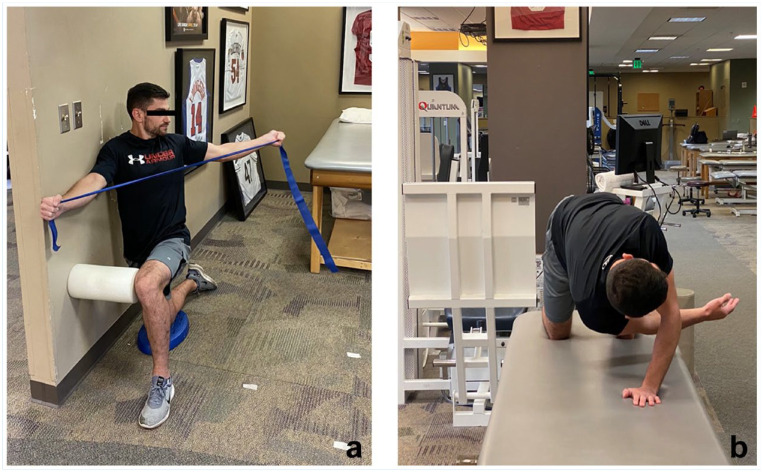
These strategies provide a foundation for improving trunk mechanics, reducing compensatory patterns, and decreasing medial elbow stress during the pitching cycle.
In summary, there is no single “best” method for increasing pitch velocity. An effective approach requires a multifactorial strategy incorporating thoracic mobility, RT, plyometric-based interventions, and sport-specific resisted throwing. Practitioners should remain cautious of excessive increases in shoulder ER PROM, as this may contribute to joint instability and increased reliance on passive structures (Reinold et al., 2018). When appropriately integrated, these methods can enhance performance while minimising compensatory movement patterns, reducing medial elbow stress, and limiting overload of the GHJ.
Further research is required to better define optimal programming strategies that maximise performance outcomes while minimising injury risk in baseball athletes. However, an understanding of the key phases of pitch delivery allows practitioners to more effectively prescribe interventions targeting delivery inefficiencies (Zhang et al., 2023).
Sorry, the comment form is closed at this time.